What Does “Planning a Wedding Amid Climate Change” Mean
This year has been rough for couples who planned to host an outdoor wedding. Couples entered Summer 2025 with optimism, only to confront extreme heat, poor air quality and unpredictability. For professional wedding planners like me, we had to rethink what a summer wedding would look like for our couples and the emergency preparedness plan we should have in place to protect them.
My Advice was Featured in the New York Times
I was recently interviewed by a writer for the New York Times regarding an article titled, “Planning a Wedding Amid Climate Change.” I shared how we have to think beyond everyone’s comfort, we have to keep their safety in mind too. You can read my feedback in the article here. Upon review, you will see how it reflects a broader shift in the wedding industry.
Why This Year Was Especially Hard for Weddings
- Climate Trends. We experienced weeks of record-breaking heat, stifling humidity, and days of poor air quality forced last-minute shifts from lawn ceremonies to air-conditioned ballrooms. And, how can we forget the orange sky that stretched from the northeast to the west.
- In one case, we heard about a tented reception, which was meant to be the pièce de résistance, became a heat trap, never dipping below 93°F even with three portable AC units running.
- The “New Normal” vs. “This is an Outlier.” These are not “weather events” anymore. They are the building blocks of what summer looks like now. And, if we, as wedding planners and guides, don’t build for them, we’re doing a disservice to our couples.
What “Climate-Aware Wedding Planning” Looks Like in Practice
- Perform a site visit of the venue with real conditions: Don’t just pick a site based on aesthetics. On a hot day, visit it under sun, wind, and humidity. Note airflow, shade patterns, ground temperature (stone vs. grass), and where heat accumulates. Map “cool zones” vs. “hot zones.”
- Require decision thresholds in contracts: Write into your planning contracts heat-index or air-quality triggers. For instance: “If the heat index exceeds 95°F two days in advance, we reserve the right to move ceremony/reception indoors or to a hybrid layout.” That gives you permission to make the hard call ahead of time rather than scrambling.
- Design modular structures with ventilation in mind: Tents are not enough; they need roof vents, open sides, or optional sidewalls. Use high-powered fans, misters, or even spot cooling units if feasible. Shade structures (pergolas, sailcloth, fabric drapery) can be both aesthetic and purposeful.
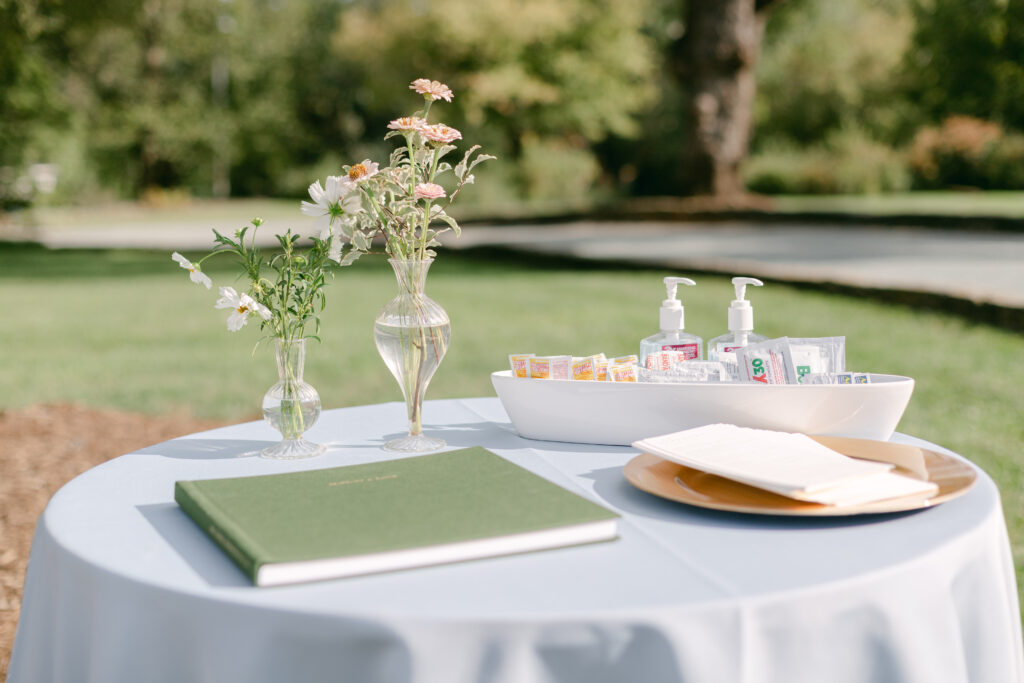
- Hydration & guest health provisioning: Set up hydration stations (with electrolytes), shade tents with seating, cooling towels, handheld fans, and optional misting sprays. Make sure all vendors and staff have shaded rest areas and frequent water breaks. Consider a “health tent” outfitted with basic first-aid, ice packs, even a portable oxygen unit if air-quality dips.
- Plant, food, and cake strategies: Use heat-resilient blooms (like protea, orchids, succulents, or native wildflowers) rather than delicate ones. For cakes, consider hybrid designs (half real, half faux) or frostings that endure heat. Among caterers, double the ice, pre-chill plates, avoid delicate items like raw seafood in extreme heat, and work with prep closer to service time.
Also, if you are interested in interviewing me for an article or booking me as a speaker, you can find more information about me as a speaker here.
Love and Soul Always, Kawania
Photography: Stephanie Whitehill Photography